Siskiyou County Dog Registration Information
Service Dogs and Emotional Support Animals in Siskiyou, California
If you’re searching “where do I register my dog in Siskiyou County, California for my service dog or emotional support dog,” it usually helps to separate two different processes: (1) local dog licensing (a county or city requirement tied to rabies vaccination and identification tags) and (2) service dog or emotional support animal (ESA) status (which is based on legal definitions and documentation, not a single universal government registry).
- Dog licensing is handled by local government offices (county animal control and, in some cases, city offices).
- Service dogs are not “registered” through a universal federal database; their legal status comes from training and disability-related use.
- Emotional support animals (ESAs) are also not registered through a universal federal database; ESAs are typically supported by documentation from a licensed healthcare professional for specific contexts (commonly housing).
Where to Register or License Your Dog in Siskiyou County, California
The offices below are official public agencies that provide dog licensing and/or animal services information for Siskiyou County, California. If you live inside certain city limits, your city may handle licensing directly; if you live in unincorporated areas, the county office is typically the starting point.
Siskiyou County Animal Control
City of Yreka (Dog Licensing at City Hall)
City of Yreka Animal Control (Impound / Animal Control Contact)
City of Mount Shasta Police Department (Animal Control / Dog Licenses within City Limits)
Town of Fort Jones (Town Hall)
Siskiyou County Environmental Health (Rabies Program / Public Health Support)
Overview of Dog Licensing in Siskiyou County, California
What “dog registration” usually means locally
In everyday language, people often say “register my dog,” but local agencies typically use the term dog license. A dog license in Siskiyou County, California generally functions as a local identification and compliance record that is closely tied to rabies vaccination and sometimes other requirements (like spay/neuter status).
County vs. city rules (why your location matters)
Siskiyou County includes incorporated cities and towns as well as large unincorporated areas. That matters because:
- Some cities handle dog licensing through city offices (for example, Yreka notes dog licensing at City Hall).
- In many areas, county animal control is the most practical starting point for “animal control dog license Siskiyou County, California” questions—especially for unincorporated addresses.
Common reasons licensing is required
- Helps local animal control identify a dog quickly if it is lost or impounded.
- Encourages up-to-date rabies vaccination, which is a public health measure.
- Supports local animal services operations (fees may fund enforcement and shelter services).
What You Need Before Registering a Dog
Typical documents and information
Dog licensing requirements in Siskiyou County, California can vary by municipality, but most licensing processes request a similar set of basics. Before you call or visit, gather:
- Proof of current rabies vaccination (rabies certificate from your veterinarian).
- Owner identification (driver’s license or other ID).
- Proof of address (especially if licensing is tied to city limits or a specific jurisdiction).
- Spay/neuter documentation (if applicable, since altered dogs may qualify for a lower fee in some jurisdictions).
- Dog details: name, breed/type, color/markings, age, sex, and microchip number (if microchipped).
Rabies vaccination is commonly required for licensing
Many local animal control agencies emphasize rabies prevention and require proof of vaccination before issuing or renewing a license. If your dog is newly vaccinated, keep the certificate available so you can match the vaccination date and veterinarian information to your license application.
Steps to Register or License a Dog in Siskiyou County, California
Step 1: Confirm your licensing jurisdiction (county or city)
If you’re trying to figure out where to register a dog in Siskiyou County, California, start by confirming whether your address is:
- Within an incorporated city/town (which may issue licenses through city hall or a city animal control unit), or
- In an unincorporated area (where county animal control is commonly the appropriate office).
Step 2: Get (or verify) current rabies vaccination
Make sure the rabies vaccination is current before applying. Your vet can provide a certificate showing vaccination date and expiration. If your dog has a medical exemption, ask the licensing office what documentation they accept and how it affects licensing.
Step 3: Prepare your paperwork and dog details
Gather the items listed above (rabies certificate, ID, address verification, spay/neuter proof if applicable). Having the microchip number is helpful, even if it is not required.
Step 4: Apply and pay the license fee (if required)
Once you confirm your local office, ask what options are available for submitting an application (in person, by mail, or other methods). Fees and renewal schedules can differ by jurisdiction.
Step 5: Keep your tag/receipt accessible
After licensing, you may receive a license tag and/or paper license record. Keep records in a safe place. If your dog is ever lost or impounded, license details can help speed up a reunion.
Service Dog Laws in Siskiyou County, California
Service dog status is not the same as a local dog license
A service dog is generally a dog trained to perform tasks for a person with a disability. Service dogs are not made “official” by paying a fee to a registry. Instead, their status comes from how the dog is trained and used to assist with a disability, and from the laws that protect access rights.
No single universal federal “service dog registry”
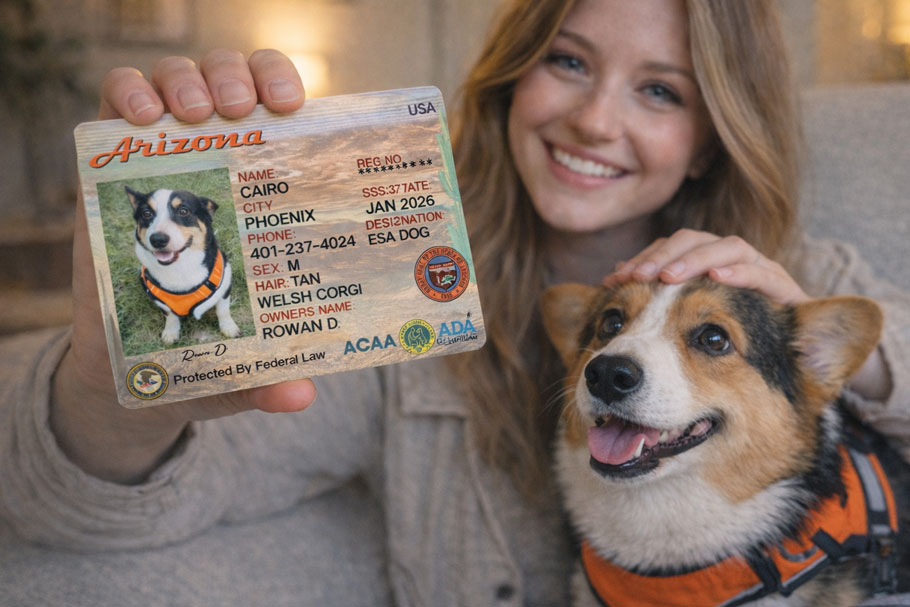
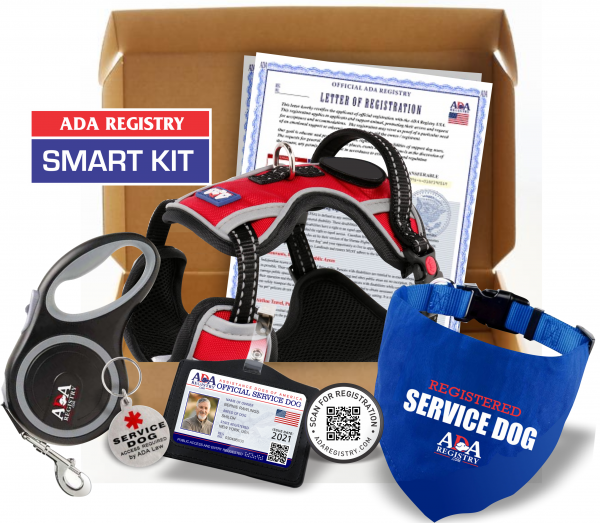
People often search for “service dog registration,” but there is no universal federal government registry that turns a dog into a service dog. Some handlers choose to use ID cards, vests, or tags, but those items are not what establishes service dog status.
How local licensing typically interacts with service dogs
Even if your dog is a service dog, local government may still require a dog license in Siskiyou County, California (or in your city) just like any other dog. The practical difference is that service dogs have legal access protections in many public settings, while licensing is a local public health/identification requirement (often linked to proof of rabies vaccination).
| Topic | Dog License | Service Dog | Emotional Support Animal (ESA) |
|---|---|---|---|
| What it is | Local licensing record and tag, usually tied to rabies vaccination | Dog trained to perform tasks for a person with a disability | Animal that provides comfort/support; typically supported by healthcare documentation for specific contexts |
| Where it’s handled | County or city licensing office / animal control | Not issued by a universal government registry; based on training and disability-related use | Not issued by a universal government registry; status is based on documentation and applicable rules (commonly housing) |
| Common documents | Rabies vaccination certificate; sometimes spay/neuter proof; owner/contact info | Training and disability-related need (documentation requirements depend on context; often not required for public access) | Letter/documentation from a licensed healthcare professional (context-dependent) |
| Public access | Not a public access credential | Typically protected access in many public places when the dog is a trained service animal | Not the same public access rights as a service dog |
| Does it replace local licensing? | N/A | Usually no—service dogs may still need to be licensed locally | Usually no—ESAs may still need to be licensed locally |
Emotional Support Animal Rules in Siskiyou County, California
ESAs vs. service dogs (why the difference matters)
An emotional support animal is not the same as a service dog. ESAs generally provide comfort or emotional support, but they are not necessarily trained to perform specific tasks related to a disability. Because of that distinction, ESA status does not automatically come with the same public access rules as service dogs.
No single universal federal “ESA registry”
Like service dogs, ESAs are not registered through one universal federal government registry. If you are being asked for an ESA “registration number” as if it were a government database, that may not align with how ESA status is typically documented. In real-world situations, ESA recognition most often comes up in specific contexts (commonly housing), where documentation from a licensed healthcare professional may be requested under applicable rules.
Local licensing still applies in most cases
Even if your dog is an ESA, local dog licensing requirements may still apply. If you’re unsure about dog licensing requirements Siskiyou County, California for your address, contact the official offices listed above and ask what is required for your jurisdiction.
Frequently Asked Questions
Where do I register my dog in Siskiyou County, California?
For many residents, the starting point is Siskiyou County Animal Control in Yreka. If you live within certain city limits (such as Yreka, Mount Shasta, or Fort Jones), your city may issue the license directly through a city office. Use the office section above to contact the right agency for your address.
Do I need a dog license in Siskiyou County, California if my dog is a service dog?
In many jurisdictions, service dogs still must comply with local public health and identification rules such as rabies vaccination requirements and dog licensing. Call the appropriate county or city office to confirm current local requirements and whether any fee adjustments or documentation options apply.
Do I need a special “service dog registration” card from the government?
There is no single universal federal government registry that you must use to “register” a service dog. Service dog status is based on the dog’s training to perform tasks for a disability and the applicable laws that protect access in qualifying situations.
Is an emotional support dog the same as a service dog?
No. Service dogs are trained to perform tasks for a person with a disability. Emotional support animals provide comfort/support but are not necessarily trained for disability-related tasks, and they generally do not have the same public access rules as service dogs.
What if I live near a city boundary?
City boundary lines can affect where you apply. If you’re close to a boundary or have a mailing address that differs from your jurisdiction, confirm using your physical address with the county or city office before submitting paperwork or payment.
Register A Dog In Other California Counties
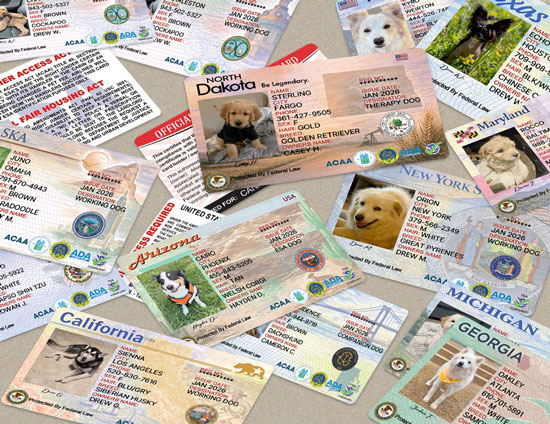
Select your county below to get started with your dog’s ID card. Requirements and license designs may vary by county, so choose your location to see the correct options and complete your pup’s registration.
- Alameda County Dog Registration
- Alpine County Dog Registration
- Amador County Dog Registration
- Butte County Dog Registration
- Calaveras County Dog Registration
- Colusa County Dog Registration
- Contra Costa County Dog Registration
- Del Norte County Dog Registration
- El Dorado County Dog Registration
- Glenn County Dog Registration
- Humboldt County Dog Registration
- Imperial County Dog Registration
- Inyo County Dog Registration
- Kern County Dog Registration
- Kings County Dog Registration
- Lake County Dog Registration
- Lassen County Dog Registration
- Madera County Dog Registration
- Marin County Dog Registration
- Mariposa County Dog Registration
- Mendocino County Dog Registration
- Merced County Dog Registration
- Modoc County Dog Registration
- Mono County Dog Registration
- Monterey County Dog Registration
- Napa County Dog Registration
- Nevada County Dog Registration
- Orange County Dog Registration
- Placer County Dog Registration
- Plumas County Dog Registration
- San Benito County Dog Registration
- San Bernardino County Dog Registration
- San Joaquin County Dog Registration
- San Luis Obispo County Dog Registration
- San Mateo County Dog Registration
- Santa Barbara County Dog Registration
- Santa Clara County Dog Registration
- Santa Cruz County Dog Registration
- Shasta County Dog Registration
- Sierra County Dog Registration
- Solano County Dog Registration
- Sonoma County Dog Registration
- Stanislaus County Dog Registration
- Sutter County Dog Registration
- Tehama County Dog Registration
- Trinity County Dog Registration
- Tulare County Dog Registration
- Tuolumne County Dog Registration
- Ventura County Dog Registration
- Yolo County Dog Registration
- Yuba County Dog Registration